The structure we supply most often
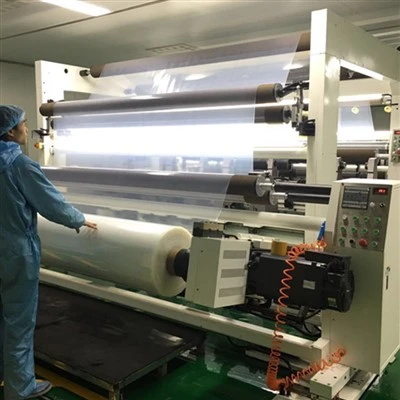
Our commonly supplied EVOH film is an 11-layer coextruded structure based on PA, EVOH and PE. PA / tie / EVOH / tie / PE is a simplified description of the material system, rather than the complete layer sequence.
We commonly supply both lidding and forming films based on PA/EVOH/PE. Thickness and other specifications are selected for their respective sealing and forming requirements. Lidding film is usually 65 to 80 μm. Forming film starts thicker because it stretches and thins as the pocket is formed: typically 150 to 400 μm, depending on the application and pocket depth.
PA adds toughness and supports forming, EVOH provides the oxygen barrier, PE provides the seal layer and moisture protection, and tie layers help bond the materials together.
|
Item |
Typical specification |
Note |
|
Structure |
PA / tie / EVOH / tie / PE (simplified) |
Material system, not the complete layer sequence |
|
Layer count |
11 layers, coextruded |
Our common supply structure; layer count alone does not determine performance |
|
Lidding film thickness |
65–80 μm |
Selected for sealing to the intended forming film |
|
Forming film thickness |
150–400 μm |
Selected for the product and pocket depth |
|
Main uses |
Forming film and lidding film |
Automatic thermoforming packaging lines |
|
Typical products |
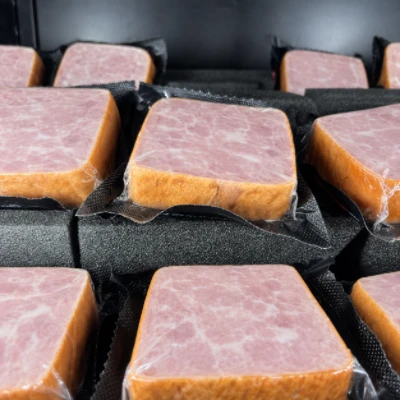
Mainly chilled foods |
Mainly supplied to food processing plants |
Layer count describes how a film is built; it is not a quality grade. In our supply experience, a well-designed seven-layer film can meet many food-packaging requirements. Additional layers may help meet particular needs, so compare the proposed performance as well as the layer count.
Choosing between EVOH and PA/PE
For many applications with modest oxygen-barrier requirements, PA/PE is a practical starting option in our supply experience. We consider the product, storage period, handling and packaging process before recommending an EVOH-containing structure.
EVOH-containing films usually cost more than comparable PA/PE films. The difference depends on the complete structure, thickness, resin grades and order requirements.
These are the starting recommendations we commonly discuss with customers:
|
Situation |
What we usually recommend |
Reason |
|
Chilled products with an oxygen-barrier requirement |
Consider an EVOH-containing structure |
Match protection to the product and intended storage period |
|
Frozen products |
PA/PE is our usual starting option for many frozen-food applications |
Review the product, storage period and any specified oxygen-barrier requirement |
|
Cost-driven projects with modest requirements |
PA/PE |
Often a lower-cost option when it meets the required pack performance |
|
Boiling, retort or other special processes |
Evaluate case by case |
Requires process-specific grades and testing |
These are starting points, not rules. We review the choice when storage periods are longer, distribution conditions change or the customer has a specific oxygen-barrier requirement. Samples help confirm the recommendation under the intended packing conditions.
What we ask before quoting
An enquiry can begin with the packed product and how it will be stored or processed. If thickness or width has not been decided, we can suggest starting options from the product, approximate pack size and equipment information.
- Will the product be chilled, frozen or stored at room temperature, and for how long? Will the pack undergo boiling or retort?
- What food will be packed, and does it contain bones, sharp edges or liquid? Is there a specified barrier requirement?
- Is the film for forming or lidding? Share the machine model, approximate pack size and any known thickness, width, roll diameter or core size.
- Does the film need printing?
- What quantity is needed? Price depends on order volume.
- These details help us select initial samples and quote on a clear basis. If some information is unavailable, send the current film or photos of the pack so we can start the discussion.
Why two "EVOH film" quotations can differ
Two films with the same nominal structure and total thickness can differ in resin grades, layer proportions and performance. Compare quotations against the same specification, order quantity and test conditions. A lower price alone does not tell you how the film will perform.
- When you compare OTR results, check that they describe the same thing:
- Sample structure and total thickness, with barrier-layer information where available.
- Test method, temperature, humidity and units.
- Whether the sample was formed, heated or otherwise processed before testing.
- Whether the value is a typical result, a single test or an agreed specification limit.
Humidity matters in particular. EVOH oxygen barrier performance changes with relative humidity, so a result measured under dry conditions should not be read as the performance of every food pack.
Forming and heat treatment need the right structure
A forming film needs to stretch into the pocket while retaining enough strength and barrier performance. The material grade, layer design and thickness all contribute. Boiling and retort also require suitable film structures, assessed through the actual heating and cooling cycle.
Test the samples on your packaging line with the intended lid. Check forming quality, seals, leakage and visible weakness at corners or sidewalls. Share photos and trial feedback if an adjustment is needed.
Samples and documentation
Sample production usually takes 7 to 10 days, depending on the factory's production schedule. Let us know the main purpose of the trial, such as improving forming, sealing or barrier performance, so we can select suitable sample options.
Food-contact documentation should relate to the offered film specification and intended use. Let us know any documentation requirements when discussing samples.
Send us your packaging details
Send Fuya the product, storage or heat-treatment conditions, forming or lidding use, equipment details and expected quantity. Include known dimensions, printing needs and an existing specification or sample if available. We can recommend a structure and thickness, provide samples and review your trial feedback before the specification is confirmed. Explore Fuya EVOH barrier film options.